It's about you as a number represented by lobby organizations
- Details
BY TREVOR GREYEYES
Federal funding models — administered through departments such as Indigenous Services Canada — require measurable reporting.
Governance organizations must demonstrate reach: how many citizens are represented, how many programs are delivered, how many participants are served, how many initiatives are implemented. Funding agreements are built around metrics. Scale matters.
Across Manitoba and nationally, Indigenous political organizations routinely cite population totals to establish legitimacy and scope. The Assembly of Manitoba Chiefs represents 63 First Nations and more than 170,000 citizens. The Southern Chiefs’ Organization cites representation of over 87,000 people. The Assembly of First Nations claims to speak for more than 900,000 First Nations citizens nationwide.
Those numbers are not arbitrary. They are embedded in how funding is structured.
When federal departments require measurable outputs, organizations respond accordingly. Representation becomes quantifiable. Community engagement becomes service statistics. Governance is translated into spreadsheets and reporting templates.
The larger the represented population and the broader the reported activity, the stronger the case for continued or expanded funding.
This is not necessarily about bad intentions. Institutions adapt to the incentives placed before them. When funding frameworks prioritize reporting requirements and population reach, organizations emphasize those same elements. Counting becomes central.
On paper, the system shows activity: programs delivered, clients served, citizens represented. The federal government receives clean data and measurable outputs. Reports indicate scale.
But numbers alone do not tell us whether conditions are improving.
Despite decades of funding and reporting cycles, First Nations people remain statistically more likely to experience homelessness, incarceration, poverty, child apprehension, addiction and preventable illness. Life expectancy gaps persist.
If success is primarily measured in terms of how many people are counted rather than how many lives improve, the system will naturally reward activity over transformation.
The issue, then, is structural. When funding architecture privileges measurable scale over measurable outcomes, organizations will prioritize what is required to sustain operations.
Representation becomes a statistic. Citizens become population totals within administrative formulas.
And as long as funding models center on headcounts and reporting metrics, the pressure to demonstrate numbers will remain stronger than the pressure to demonstrate lasting change.
Seeking to establish a Peguis First Nation off-reserve member database
- Details
BY TREVOR GREYEYES
A Peguis First Nation band member is proposing the creation of a secure, voluntary contact database aimed at improving communication with off-reserve members, who he says are frequently excluded from timely updates on governance matters.
George Robinson says the initiative is intended to ensure off-reserve members receive accurate and complete information prior to major decisions such as elections, settlements, trust matters and other votes affecting the Nation. Robinson argues that while Peguis policy recognizes all members, it does not consistently require that off-reserve members be informed or consulted in advance of key decisions.
“Without structural requirements, inclusion remains optional rather than guaranteed,” Robinson said. Robinson said the initiative is not intended to assign blame or target current leadership, but rather to address what he describes as a
policy gap. While Peguis policies recognize all members, he argues they do not consistently require that off-reserve members be informed or consulted in advance of decisions that directly affect them.
“This is about how policy is written and applied,” Robinson said. “Without structural requirements, Seeking to establish a Peguis First Nation off-reserve member database inclusion remains optional rather than guaranteed.”
Robinson emphasized that the database would be voluntary, secure and used strictly for information sharing. He said it would not collect sensitive identification data and would not be used to influence election outcomes. “Its purpose is to ensure members are informed before decisions are made, not after outcomes are already determined,” he said. Robinson also stated that should election candidates choose to share platforms or campaign materials, they would be distributed equally without preference. Robinson volunteers as a Search Lead with Morgan’s Warriors Inc., a grassroots organization named in honour of Morgan Harris. The group emerged during advocacy efforts to secure a search of the
Prairie Green Landfill after government officials initially declined to proceed. Robinson and his wife were among those who publicly advocated for the search. He now coordinates volunteer efforts, assists families, and manages the group’s communications and missing-person alerts. Robinson said his work with Morgan’s Warriors Inc. is entirely volunteer-based. In addition to serving as a Search Lead, he manages the organization’s website, social media platforms and missing-person alert distribution, and assists families during search efforts across Winnipeg and surrounding areas.
Peguis First Nation has a total registered membership of approximately 11,438 people, with roughly 3,607 members living on-reserve and 7,831 living off-reserve, according to publicly available data. Off-reserve members represent a
significant majority of the Nation’s total population and are eligible to vote in Chief and Council elections and other major decisions affecting the community. Robinson argues that given the size of the off-reserve population, formal and consistent communication mechanisms are necessary to ensure all members have access to timely and complete information prior to key governance decisions.
New trustees say missing records cloud Trust projects at Meadows, daycare and Wellington
- Details
By James Wastasecoot
Band members who went to the Peguis First Nation Real Estate Trust AGM on Feb. 7 at the Peguis Community Hall were served up with facts and opinion from trustees and band lawyer John Gailus, but left with many questions unanswered. Gailus presented a PowerPoint about two projects that have raised big questions in Peguis in recent years: the former Meadows golf course lands and the Wellington property in Winnipeg.
For many members, there has been little public information over the past four years. That left room for rumours and guesswork.
Meadows and daycare
One belief in the community was that the current Chief and Council stopped the Meadows development because they opposed former chief and consultant Andrew Marquess. Gailus told members that was not accurate. Gailus said: “I know this is controversial, because people are saying, oh, Chief and Council, they're the ones who stopped the development. No, that's not the case. There was a stop work order. December 12, 2023 from Red River Planning District on meadows, saying, you can't develop without a permit.”
He added: “On January 4 [2024] there's another letter to Purchase Co. saying you need to pay your property taxes. What Chief and Council did do is in March of 2024, they passed the BCR demanding that the trust cease all operations until the annual audits are produced for membership.”
Read more: New trustees say missing records cloud Trust projects at Meadows, daycare and Wellington
The Meadows Daycare: Who Really Owns the Land?
- Details
By Trevor Greyeyes
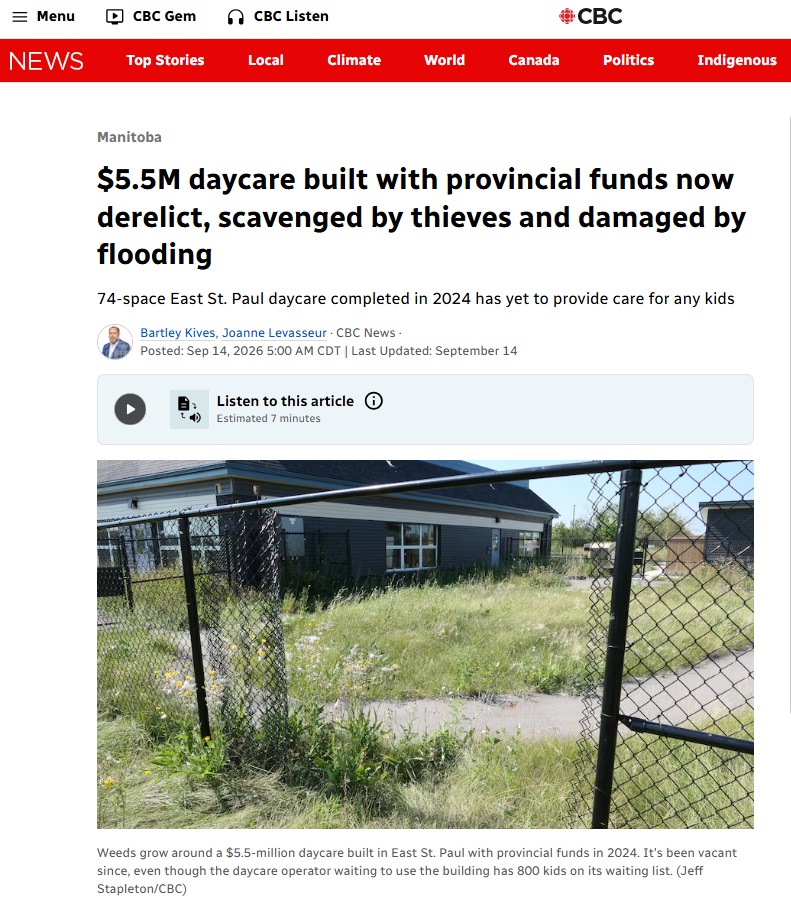
EAST ST. PAUL – A brand-new daycare building is sitting empty and cold just off Highway 59. While many Peguis families need childcare, this $4 million project is stuck in a big argument between the Manitoba government and the Peguis First Nation Real Estate Trust (PFNRET).
The provincial government says they aren’t opening the doors because they are worried about who actually owns the land. But new documents found through an information request tell a different story.
CFS executive director absent from ‘emergency’ band meeting on Peguis CFS
- Details
By James Wastasecoot
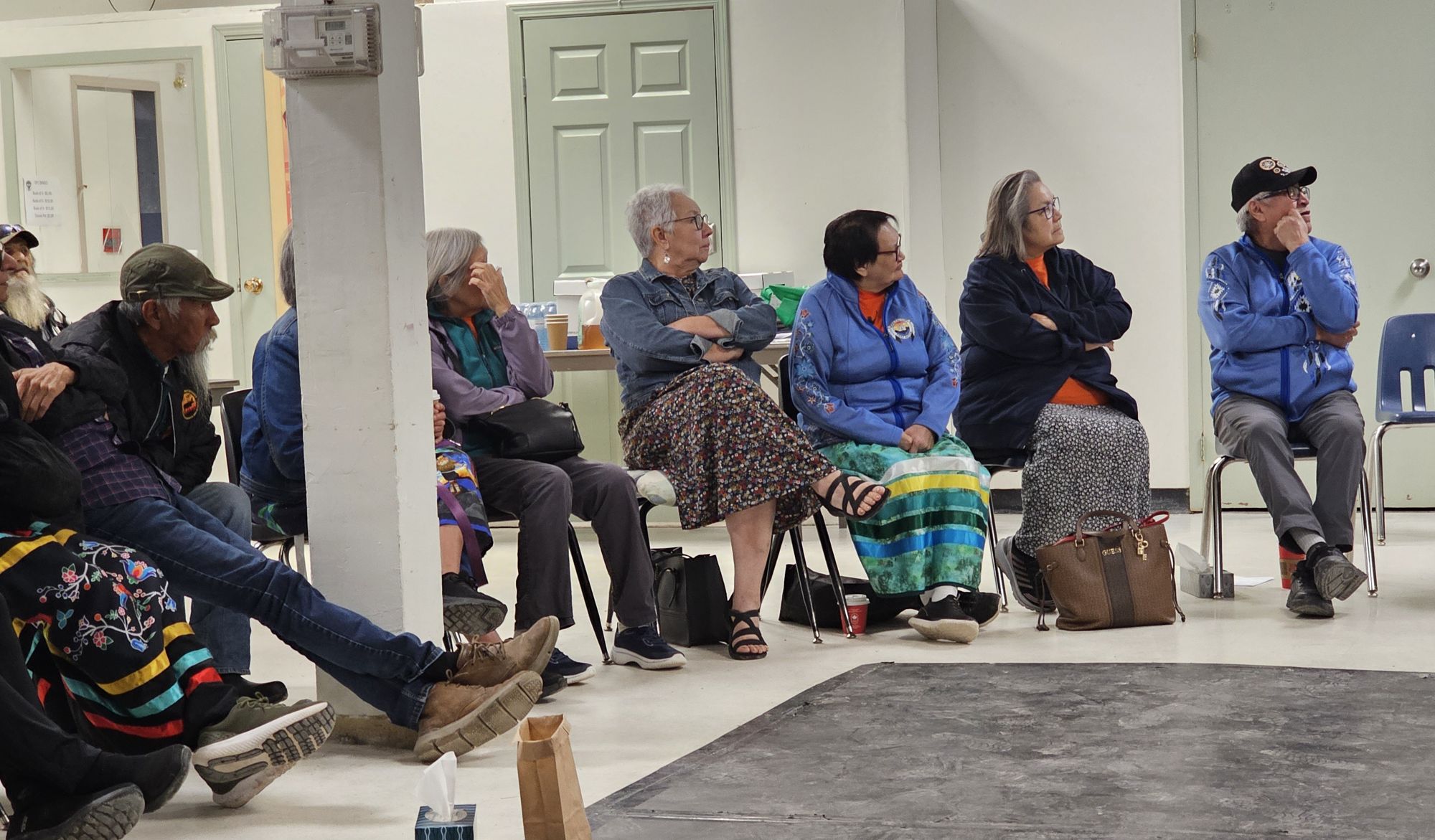
JAN 14, 2026 SELKIRK — An “emergency” community band meeting billed as an information session with Peguis Child and Family Services drew members to the Selkirk Recreation Complex, but the agency’s executive director did not attend, according to Chief Stan Bird.
The meeting, held Jan. 14, was called after concerns were raised by members living in Winnipeg, Selkirk and Peguis First Nation, with the notice stating the purpose was to give band members an opportunity to hear directly from Peguis CFS “Administration and Governance” in response to those concerns.
Read more: CFS executive director absent from ‘emergency’ band meeting on Peguis CFS
Page 1 of 7