
Plans for immediate flood protection, highway and bridge upgrades, and longer-term mitigation work were laid out for Peguis First Nation members Monday at a band meeting at the Peguis Community Hall.
Chief Stan Bird told members the plans are not the final answer and said no decision has been made on the options without community consultation. Council wants to hear what members have to say before the work moves ahead, he said.
“This is moving at a very fast pace,” Bird said. “We have momentum, and we really want to capitalize on that momentum through the partnership that we’ve established with the federal government and the provincial government.”
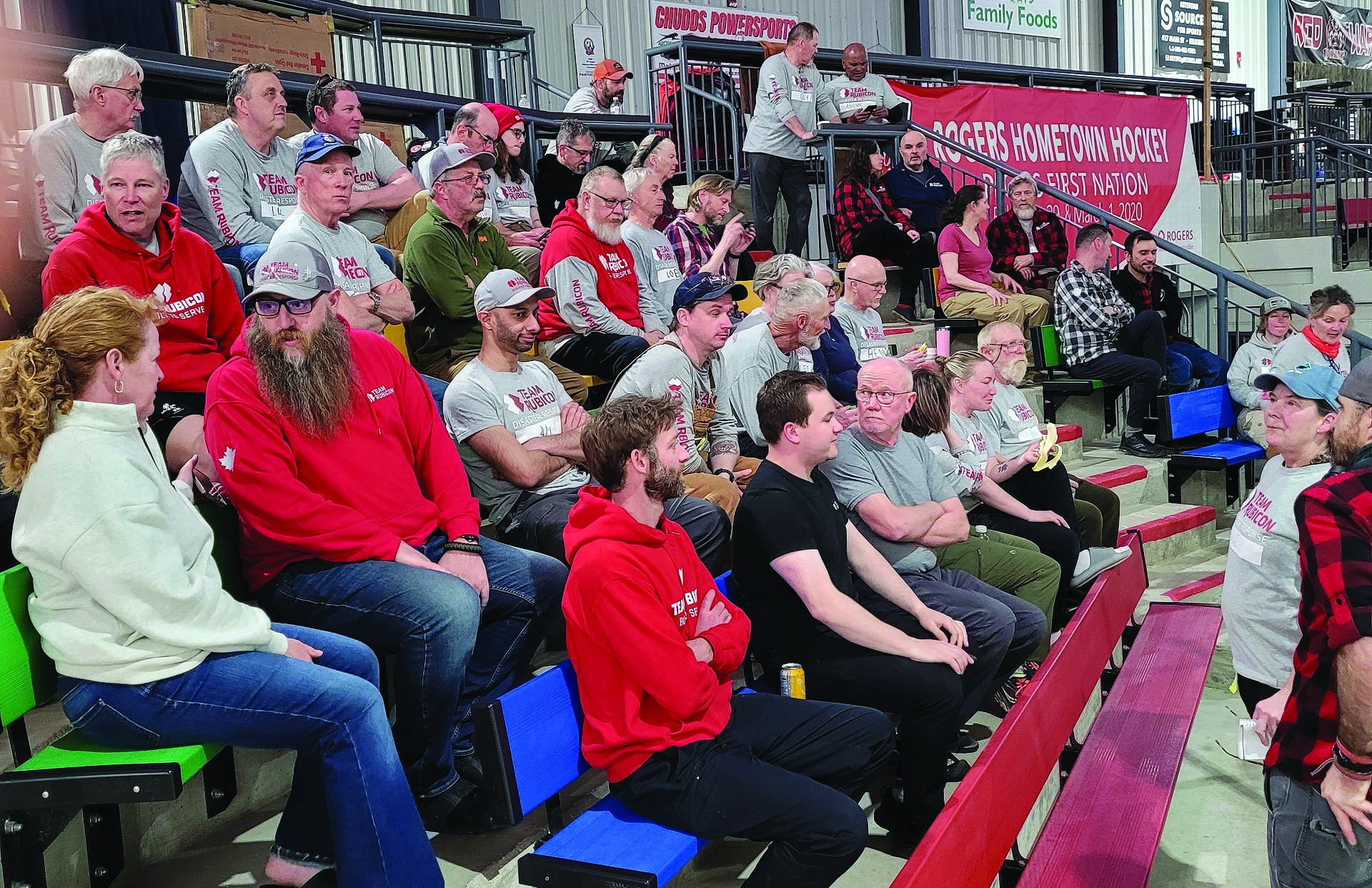
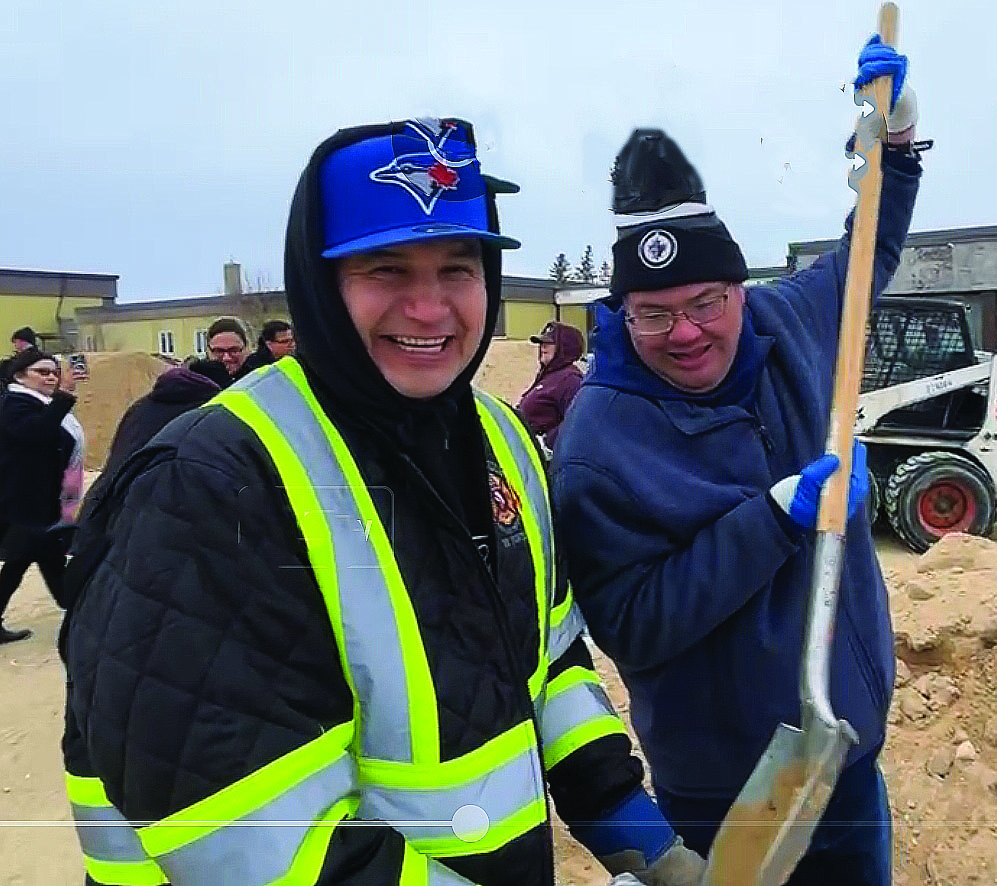
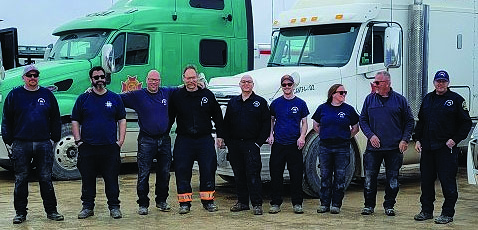
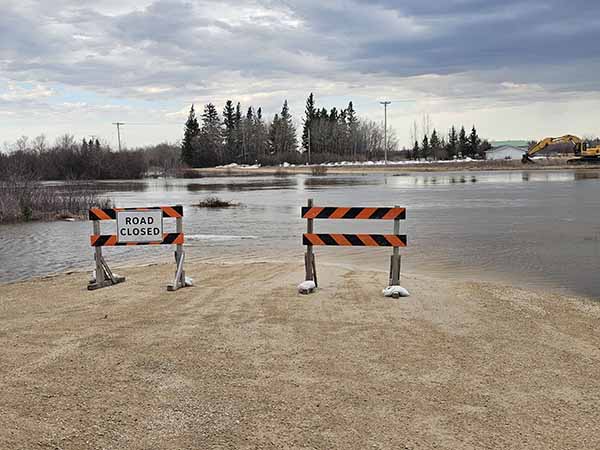
For the past several weeks, Peguis council and staff have been meeting with federal and provincial officials to turn this spring’s flood preparations into longer-term protection plans. The anticipated 2022-level flood did not materialize, but the response brought an unprecedented effort from volunteers and workers, including people who came from as far away as B.C.
John Logan, a senior engineer with Manitoba Transportation and Infrastructure, said the work between Peguis, Canada and Manitoba created momentum that has continued. Jennifer MacGillivary of Indigenous Services Canada was also at the meeting as part of the team working with provincial and Peguis officials.
Bird said he expects the parties to sign a memorandum of understanding to deal with funding and other essentials. Councillor Donna Sutherland said the costs of flood preparation and planning so far have been covered by the federal and provincial governments, not Peguis. “Everything was covered by the province and the feds,” she said.
A slide presented at the May 25 band meeting outlines the staged plan for Peguis permanent flood protection, including immediate protection, bridge and highway improvements, and longer-term mitigation works.
Immediate protection
The first stage, called Phase 1a, focuses on protecting homes, critical infrastructure and local road access before the next major flood event. The concept presented to members combines a central community dike, subdivision dikes and individual dikes around separate properties.
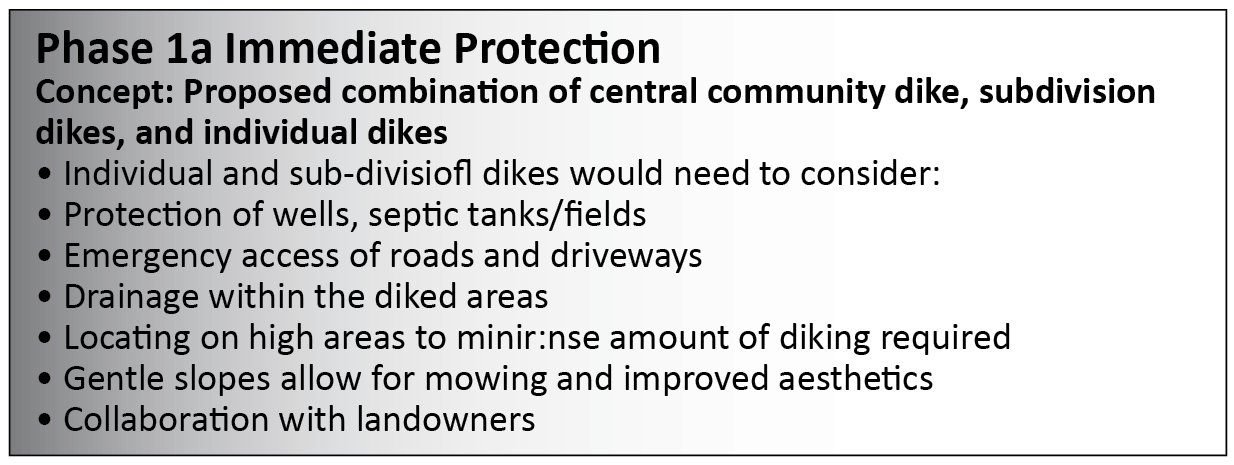
The work will have to account for wells, septic tanks and fields, emergency access on roads and driveways, and drainage inside diked areas. The presentation also said dikes should be located on higher ground where possible to reduce the amount of construction needed, with gentle slopes to allow mowing and improve appearance. Collaboration with landowners was listed as a key requirement.
Phase 1a proposes a combination of a central community dike, subdivision dikes and individual dikes. The presentation said designs would need to account for wells, septic systems, access and drainage.
Homes identified for protection
A slide presented at the meeting identified 325 homes or sites that may require some form of protection. The list includes 77 P1 sites identified by Peguis First Nation as most at risk; 90 P2 sites within the 1-in-200-year floodplain where temporary protection was built in spring 2026; and 158 P3 sites within or adjacent to the 1-in-200-year floodplain.
The same slide said about 75 homes may only require freeboard protection, leaving about 250 homes that may require diking.
The presentation divided properties requiring protection into P1, P2 and P3 categories, with 325 homes or sites listed in total.
Individual, subdivision and community dikes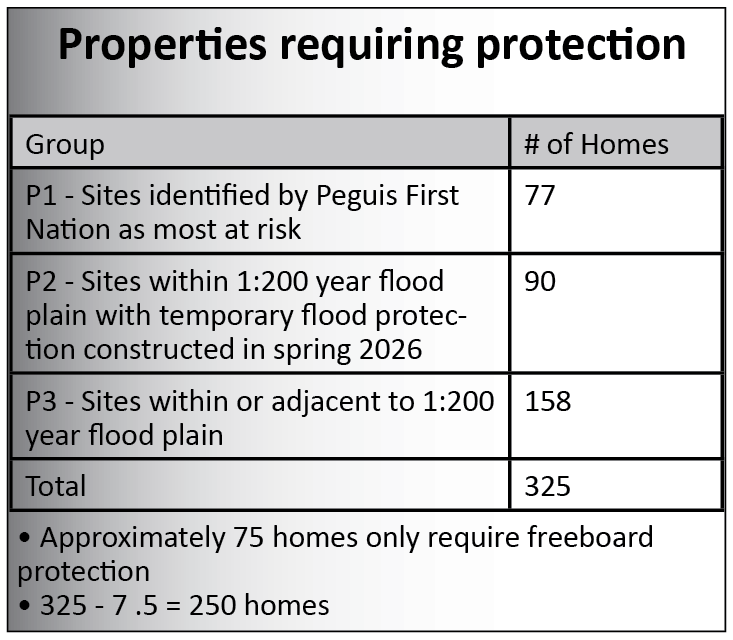
KGS engineer Bruno Arpin said individual dikes would be considered for homes that are separated from neighbourhoods, while subdivision dikes could protect groups of nearby homes. In some locations, roads and driveways could be raised to become part of the protection system.
Arpin said the goal is to protect properties, not only houses. That means taking into account driveways, trees, outbuildings, septic systems, natural drainage patterns and access during an emergency.
He said some dikes could be made of clay and shaped with gentle slopes, rather than built as steep walls. Culverts, gates and sump pumps may also be needed to keep water moving properly and protect homes from both river flooding and internal drainage or groundwater problems.
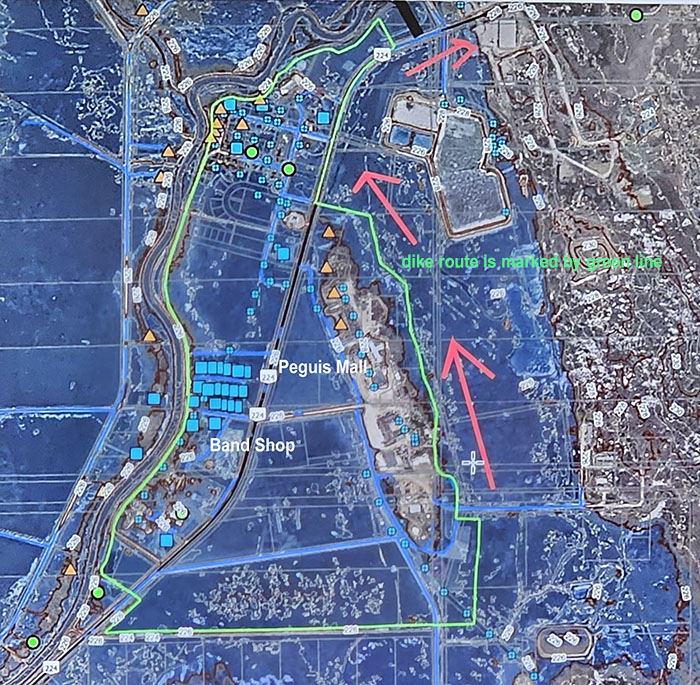
A central community dike is also being considered for the heart of the community. The proposed route shown to members would protect the Band Shop, west apartments, townsite, Peguis Mall and the Treaty Grounds area, with the route leading toward the lagoon area before tying back west toward the river. Arpin said the larger dike would also help protect key water and wastewater infrastructure, while lagoon protection work completed in April would be reviewed to determine whether more work is needed.
A map shown at the meeting outlines a proposed central community dike around the mall, Band Shop, townsite and nearby community infrastructure.
Bridge and highway improvements
Phase 1b would focus on provincial bridge and highway improvements to maintain community access during major flood events. Logan said Provincial Road 224 would be raised at locations that flood, and bridge work would be part of the access plan.
The slide presented by Manitoba Transportation and Infrastructure said PR 224 upgrades would include raising the highway and replacing the Snake Creek Bridge, replacing the Eaglenest Creek Bridge, and raising the highway at spot locations that flood within the community. The staged plan listed a goal of starting construction by 2028.
Phase 1b proposes PR 224 bridge and highway improvements, including bridge replacements and road raising to maintain emergency access.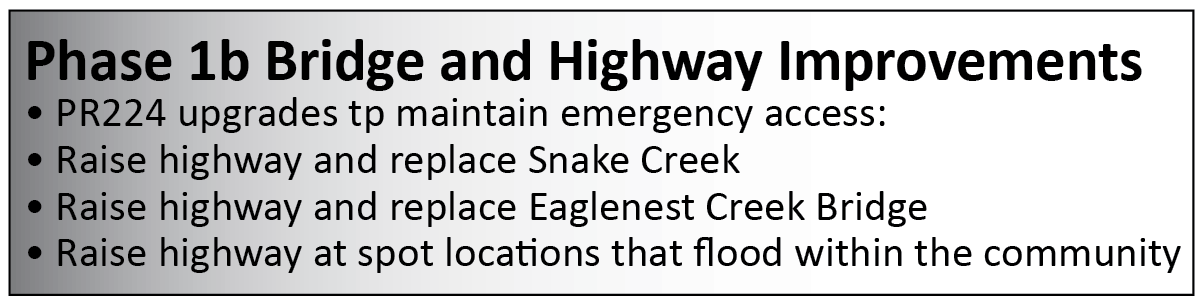
Long-term mitigation still being developed
The meeting also addressed longer-term flood mitigation work, including retention ponds upstream of the community on and off reserve. Cindy Spence, chief operating officer with Peguis Consultation and Special Projects, said more detailed information on that work will be presented soon by hydrologist Ian Halket and Mike Sutherland, director of Peguis Consultation and Special Projects.
Bird said the diking now being discussed is intended as interim protection while the First Nation continues work on a more permanent solution. He said studies have produced a wealth of data, and that information is being used to determine the best long-term approach for Peguis.
“Right now, what the data is saying is that it’s the retention ponds that will provide the most protection for our community,” Bird said.
Members ask about diversion, communication and housing
During the question period, some members questioned whether a diversion, discussed in earlier decades, has been set aside. Bruce Sinclair said council in the 1980s had put forward a diversion as the preferred plan.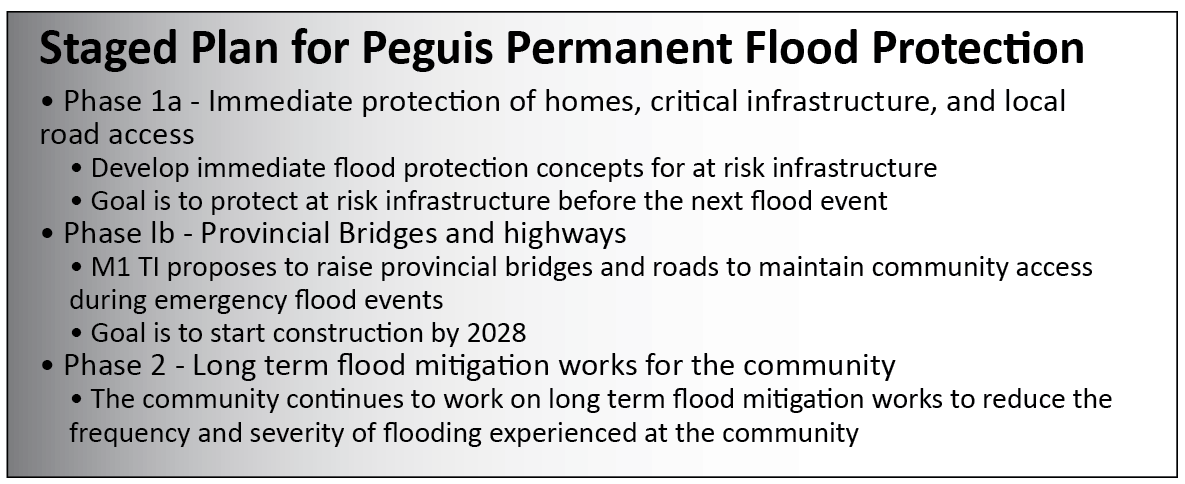
“They’re going to dike all our houses, and that’s going to be the way it’s going to stay,” Sinclair said. “They’re not going to build that diversion.” He added: “Build a diversion and not settle everything. I don’t know what’s so hard about that. The government put us here, and they’re going to look after us.”
Bird replied that Peguis has told officials the individual and central-area diking now being discussed are interim measures. He said that message was raised as recently as last week in discussions with Minister Gull-Masty.
Sherry Daniels, speaking as an evacuee and homeowner, called for better communication with families whose homes are at risk. She said homeowners need to know where they stand on the risk list rather than being told only that they are on a list and will be sandbagged if flooding comes.
“That doesn’t offer a lot of comfort and safety and planning for us,” Daniels said. She said communication should happen with homeowners, not after decisions have already been made for them, and she urged officials to remember the mental health and housing impacts of repeated flooding.
Roberta Flett, who said her family was evacuated in 2011 and 2017, said each home needs to be assessed individually. She said her home has a wood foundation and has experienced serious foundation and basement issues, making a standard berm solution unlikely to solve the problem. “Every home is different, and you have to look at them individually,” she said.
Housing also came up during the discussion. Bird said the First Nation expects to receive transitional housing and that more housing is being planned. He also expressed frustration that Peguis has trust funds exceeding $140 million but council has not been able to use those funds to build housing.
“There’s so much more that we’re going to do,” Bird said.