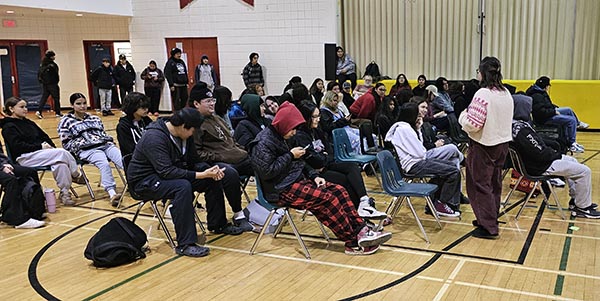
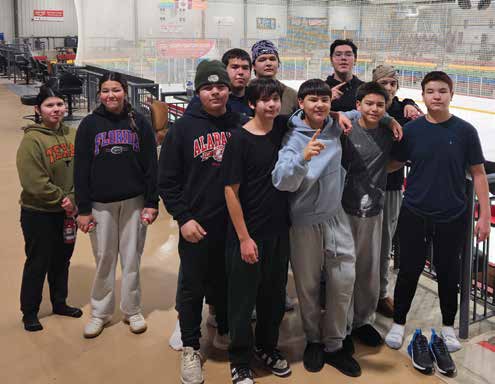
The Peguis Central School gym looked more like a hands-on lab than a basketball court on Feb. 17, as students rolled out science-fair projects and walked teachers through their questions, methods, and results. Judges moved table to table, pressing students to explain what they tested, what they observed, and what they learned. In all, 40 projects competed in grade categories, with 4 being completed by high school students. Beyond the display boards, the fair was a practical check-in on the skills Manitoba wants students building in science: scientific inquiry, problem-solving, decision-making, and communicating evidence, alongside real-world connections between science, technology, society and the environment. Science education groups and research on school science fairs also point to the same payoff: projects like these help students practice “doing” science, strengthen communication and critical-thinking skills, and build confidence and ownership of learning.
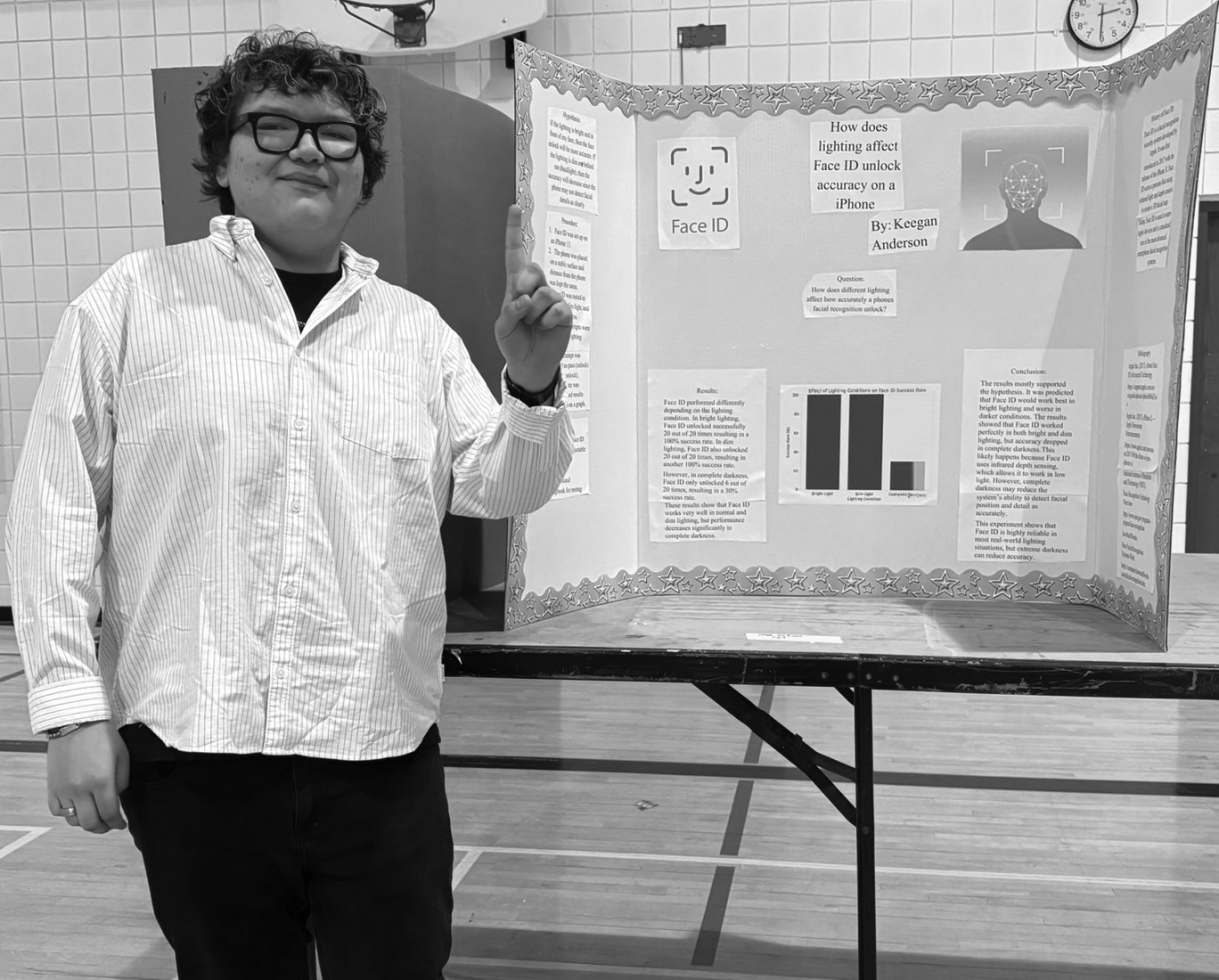
Emerging technologies are not lost to our youth in Peguis. Anyone with a phone has numerous gadgets and science running which most people don’t bother to experiment with. Keegan Anderson, grade 12, wondered how well his Iphone facial recognition app worked under different lighting conditions. The app unlocks your phone if it recognizes
your face. Voila, there was born a science experiment. Keegan tested his Iphone app in bright, dim and complete darkness and found ou that under bright conditions the app scored 20 out of 20, a 100% success rate. Under dim conditions, the app also scored 100%. In complete darkness, the app unlocked the phone only 6 times out of 20, or 30% success rate. Keegan is doing further testing to see what the results are if you’re wearing sunglasses or a face mask like the type worn during Covid times. “It was fun to participate, but to come first among the 4 projects, was good,” he said.
On the right is a summary of winners and the dates for the regional fair to be held in Winnipeg.
The regional science fair will be held March 19 and 20. A maximum of two students can accompany each project.