
By James Wastasecoot
Former students of Mackay Indian Residential School returned to Dauphin in early September for a gathering built around two words: Moving On.
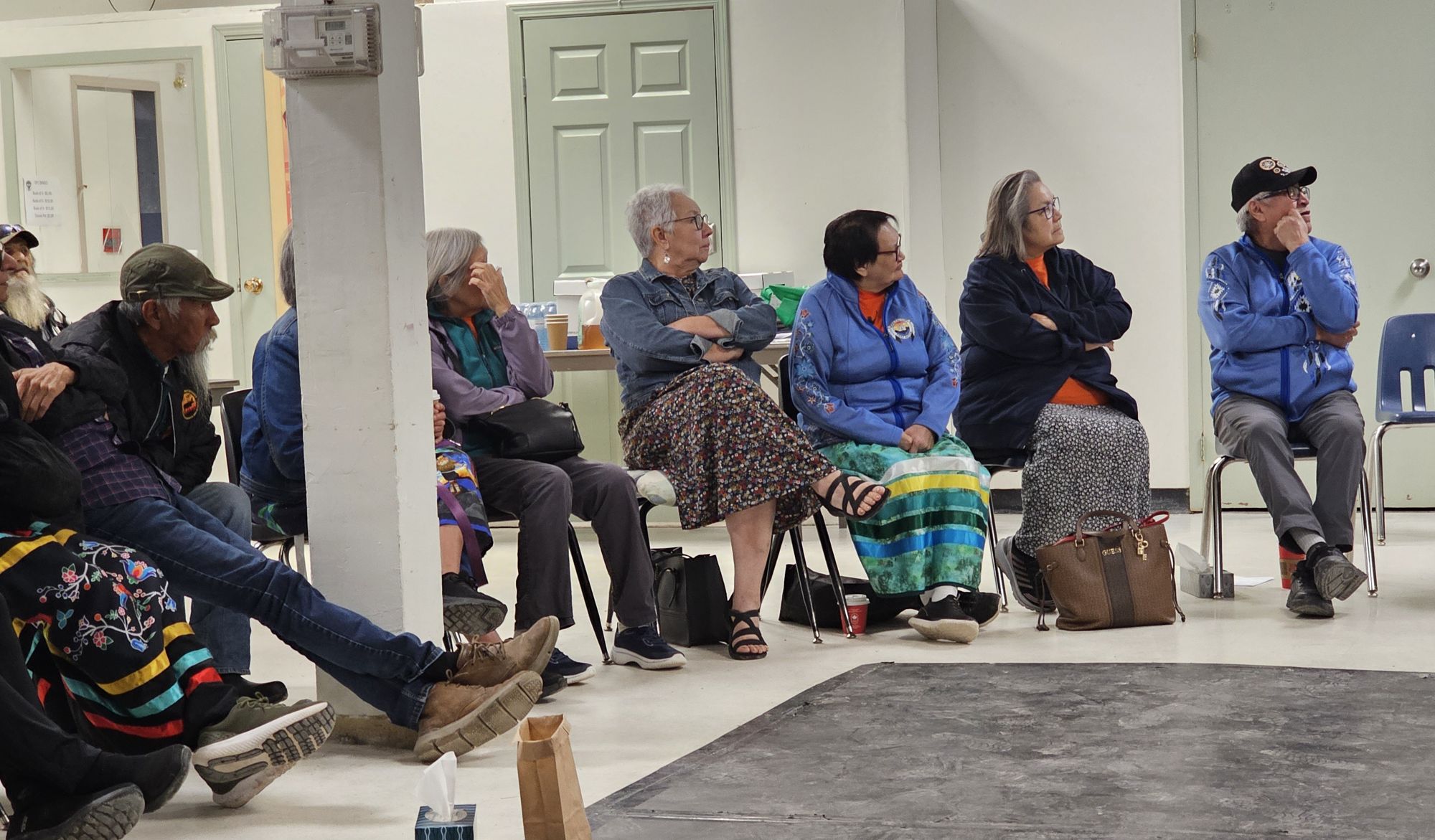
About 50 survivors registered for the Sept. 5 and 6 gathering at the Dauphin Friendship Centre. Many began arriving Friday evening, Sept. 4, meeting old friends and former classmates before the formal program began. Over the next two days, a large sharing circle brought stories of separation, abuse, loneliness and the difficult lives many survivors faced after returning home. It also brought laughter, affection and the relief of being understood by people who had lived through the same institution.
Lead organizer Clara Kirkness of Tataskweyak said Dauphin was chosen partly because some survivors were attending a Mackay gathering for the first time. The location also allowed survivors to visit the former Mackay school building, which has been purchased by a developer for conversion into apartments.
Organizers brought out a memory blanket honouring former students who have died. The names of deceased survivors will be written on ribbons and added to it. For Kirkness, the gathering also carried the memory of earlier efforts. She recalled organizing a reunion in 2010 with Alice Bear and Dan Highway at the Southeast Resource College, when there was no funding and organizers paid expenses themselves because, she said, “We felt it had to be done.”
Alice Bear described the Dauphin reunion as a family gathering. The people in the room, she said, were the children who had grown up together while separated from their own homes and families. One of her surprises was meeting Nancy Moore, a friend she had not seen since she was 17.
“To share our stories and how far we have come. We are still here,” Bear wrote. “We survived the living through abuse, alcoholism and abandonment.” Many survivors, now in their late 60s, 70s and 80s, are still working, she added. “Totally amazing people, and strong. I am grateful for their strength, courage and hope.”
Among the people who had travelled to be there was Johnny Clipping of Sayisi Dene First Nation. His long journey to the gathering became part of the story he shared. He had wanted to attend previous reunions but could not make the arrangements. This time he pieced the trip together with help from friends, a medical trip to Winnipeg and a ride from a woman named Belinda. For more than two weeks before the gathering, he said, the approach of September had brought back the old anxiety of another school year beginning far from home.
He spent four years in Dauphin without seeing his parents, brothers or sisters. In all, he said, he spent five years there as the only Dene student. Every September carried the knowledge that he would disappear from his family for another 10 months.
The years away damaged the ordinary bonds between brothers and sisters. When Clipping was eventually reunited with his family, he did not recognize one of his own older sisters. He thought she was a stranger picking on his younger siblings and fought with her. His father punished him before realizing what lay behind the incident. The deeper hurt, Clipping said, was that he had never been given the chance to know his sister while growing up.
That experience stayed with him. Now the youngest surviving sibling in his family, he said he looks after his sisters and goes out of his way to help them. It is one of the lessons he carried out of a childhood in which family relationships were repeatedly interrupted.
Residential school also affected his ability to show emotion and speak words of affection. He said he had not heard “I love you” at school. What he remembered instead were beatings. Years later, one of his sons taught him to say those words. Now they end their telephone and video conversations by telling each other, “I love you.” Clipping said he has learned to say the same to his other children and to mean it “from the bottom of my heart.”
His wife, whom he first met in Dauphin, also attended residential school. Clipping spoke openly about the alcoholism that damaged their marriage and about the strength she showed when, after he became sober, she welcomed him back. She died in May. He told the gathering that her death devastated him, though he often grieved alone and found it difficult to cry in front of others.
“She showed me that there is love available, and she gave it back to me,” he said. The family she gave him and the years she stayed with him would never be forgotten. The love he received from her, he said, is what he now passes to his children.
Clipping’s return to the North and to the land became another part of rebuilding his life. He chose to live at Tadoule Lake, a fly-in community where caribou pass through. He recalled being out hunting birds near Murdock Lake when a caribou approached until it stood only a short distance away. He told the animal he was not there to hunt it. For Clipping, the encounter carried a message: “Welcome home. You’re home now. This is where you belong. You’re going to speak for us.”
He now carries that responsibility through land and wildlife work. He told the gathering about serving with the Indigenous-led Seal River Watershed Alliance and the Beverly and Qamanirjuaq Caribou Management Board. He credited the late Ernie Bussidor and conversations around a kitchen table with helping launch the effort to protect the Seal River watershed, its animals and Sayisi Dene heritage.
This content was sponsored by Peguis Lands and Peguis Social Departments. Content sponsorships help us to continue publishing to make sure band members are informed and know what’s going on in their institutions.