
By Trevor Greyeyes
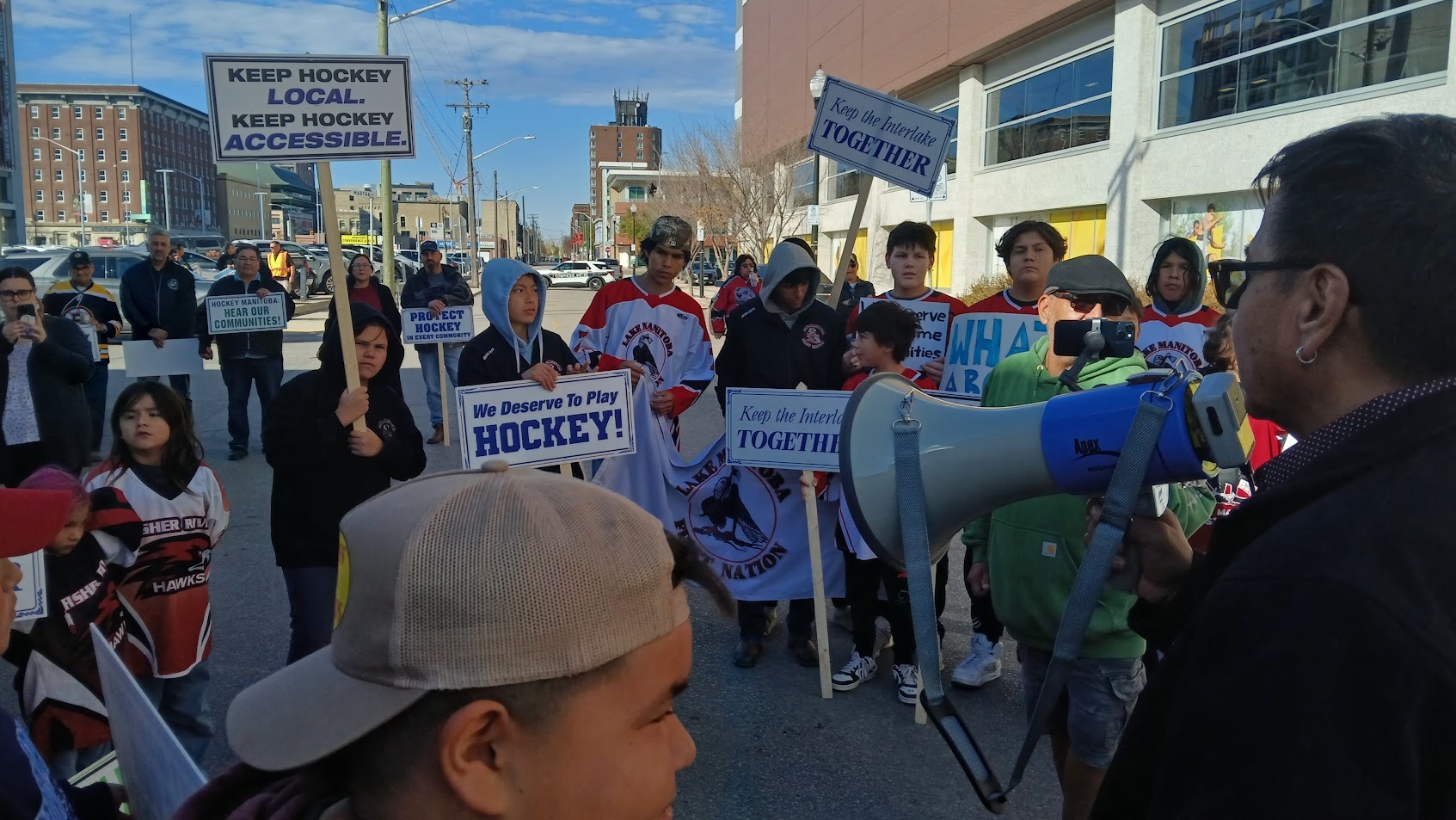
PEGUIS FIRST NATION — For 12-year-old Journey Stevenson, the opportunity to play hockey in her home community is something she shares with many other young players throughout Peguis First Nation and neighbouring Interlake communities.
But for the second consecutive season, young hockey players from Peguis face the prospect of travelling to Winnipeg to compete after the Interlake region failed to establish local U15 and U18 co-ed hockey divisions.
The situation has raised concerns about the financial burden on families, the loss of community-based hockey and the long-term future of minor hockey in Peguis and neighbouring First Nations.
The problem developed after six minor hockey associations received permission from the Interlake Minor Hockey Association to compete in Winnipeg rather than remain in their home region.
Their departure left insufficient teams to meet the minimum requirement of four teams needed to establish divisions in both age categories.
For Peguis, the consequences are significant.
Last season, Peguis players travelled approximately 160 kilometres to Winnipeg at least 22 times to participate in league competition. Those trips required considerable financial support from parents and additional funding from the First Nation.
According to Peguis recreational director Johnathon Flett, the community managed to cover those expenses last season, but there is no guarantee sufficient funding will be available every year.
The additional travel requirements also prevented Peguis from accepting players from neighbouring communities because the costs of transporting more athletes to Winnipeg were prohibitive.
Beyond the financial implications, the arrangement eliminates home games in Peguis, depriving families and residents of opportunities to gather and support their young athletes.
Addressing demonstrators gathered in Winnipeg, Peguis First Nation Chief Dr. Stan Bird recalled a time when First Nations hockey teams struggled simply to compete against their opponents.
"I remember when we used to get one goal and that was a victory for our people," Bird told the assembled crowd.
He emphasized that the current dispute is about ensuring First Nations youth have the same opportunities to participate in organized sports as other young Manitobans.
"We'll continue this fight to ensure our young people get an equal opportunity to enjoy the same rights as young people here in the city," Bird said.
The underlying concern is that local hockey associations are increasingly choosing Winnipeg competition over maintaining viable leagues within the Interlake.
Some associations requested transfers because they anticipated insufficient registration numbers, while others cited concerns about increasingly rough play within the region.
However, representatives from Peguis and Lake Manitoba First Nation maintain that enough teams could have remained to establish competitive local divisions had the transfers not been approved.
Lake Manitoba faces similar difficulties but lacks the financial resources to transport its players to Winnipeg regularly.
Consequently, approximately 30 players from its U15 and U18 programs are expected to lose opportunities for regular league competition, although local skills development will continue.
The dispute also raises questions about whether regional hockey organizations should prioritize keeping minor hockey accessible within rural and First Nations communities.
Hockey Manitoba is reviewing the circumstances surrounding the Interlake's U9, U15 and U18 divisions, although decisions concerning league structures and regional transfers remain largely with local hockey associations.
Boyd Canart, chair of Hockey Manitoba, emphasized the organization's commitment to accessibility while acknowledging the limits of its authority.
"We are standing here in support of accessibility to our sport. It's one of our core values and unfortunately Hockey Manitoba does not format leagues. We oversee the regions that do and the processes to make that happen."
For Peguis, the issue extends beyond scheduling games.
Maintaining competitive hockey close to home would reduce transportation expenses, strengthen community participation and provide younger players with local role models.
Without a sustainable regional solution, Peguis families may continue facing the costly choice between travelling to Winnipeg and losing opportunities for organized competitive hockey.